
2026 Mercedes-Benz GLS vs. 2026 Lincoln Navigator
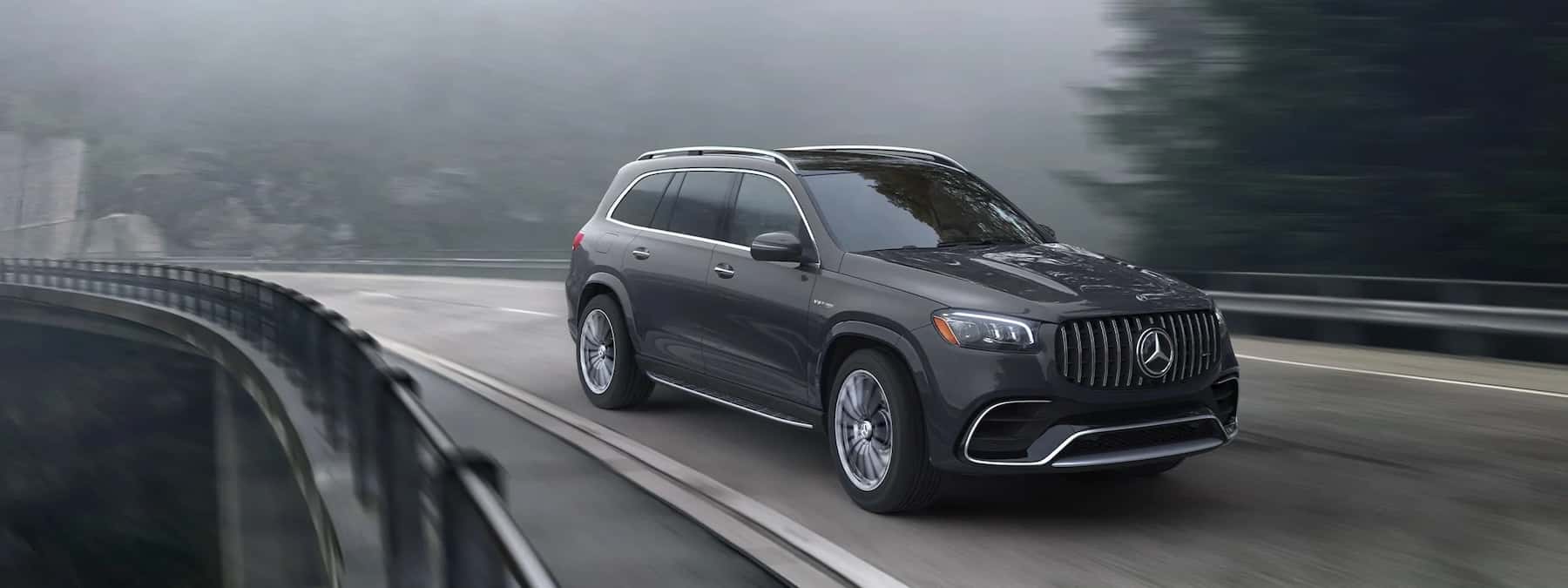
- The 2026 Mercedes-Benz GLS provides a more manageable footprint, standard AIRMATIC® suspension, and three available powertrains.
- The 2026 Lincoln Navigator offers more maximum cargo room, seating for up to eight, and a higher properly equipped towing capacity.
- For Birmingham drivers who value composed road manners and easier daily maneuverability, the GLS has the stronger overall balance.
The 2026 Mercedes-Benz GLS and 2026 Lincoln Navigator approach the large luxury SUV category from different directions. The Navigator emphasizes maximum interior room, towing strength, and an imposing road presence. The GLS combines three-row comfort with a smaller footprint, standard 4MATIC® all-wheel drive, standard air suspension, and a broader range of performance options.
Both can handle family travel, carpools, business transportation, and weekends away from Birmingham. The better SUV depends on whether you prioritize outright size or want a full-size cabin that remains relatively easy to manage around Hoover, Homewood, Mountain Brook, and downtown Birmingham.
Drivers ready to compare current configurations can begin with the new Mercedes-Benz GLS inventory at Mercedes-Benz of Birmingham.
2026 Mercedes-Benz GLS vs. Lincoln Navigator Comparison
| Category | 2026 Mercedes-Benz GLS | 2026 Lincoln Navigator |
|---|---|---|
| Standard Engine | 3.0L turbo inline-six with mild hybrid drive | 3.5L twin-turbocharged V6 |
| Standard Output | 375 hp and 369 lb-ft | 432 hp and 510 lb-ft |
| Available V8 | GLS 580 with 510 hp and 538 lb-ft | Not available |
| Drivetrain | 4MATIC® fully variable all-wheel drive | 4×4 |
| Passenger Capacity | 7, with 6 available | 7, with 8 available |
| Maximum Cargo Capacity | 84.7 cubic feet | 107 cubic feet, or 121.6 in Navigator L |
| Maximum Towing | Up to 7,700 pounds | Up to 8,700 pounds |
| Overall Length | Approximately 205 inches | 210 inches, or 221.9 inches for Navigator L |
Specifications reflect current manufacturer information and may vary by model, configuration, equipment, and production date. Towing figures apply to properly equipped vehicles.
Performance: More Choices With the Mercedes-Benz GLS
The Navigator begins with the stronger standard engine. Its 3.5-liter twin-turbocharged V6 produces 432 horsepower and 510 pound-feet of torque, paired with a 10-speed automatic transmission and standard four-wheel drive. That output suits a large body-on-frame SUV and provides the low-end strength buyers expect when merging onto I-65 or pulling a trailer.
The GLS counters with three distinct levels of performance. The GLS 450 4MATIC® uses a 3.0-liter turbocharged inline-six with mild hybrid drive, producing 375 horsepower and 369 pound-feet of torque. Mercedes-Benz estimates a 5.8-second sprint from zero to 60 mph, giving the base GLS strong acceleration without requiring a V8.
The GLS 580 4MATIC® moves to a 4.0-liter biturbo V8 with mild hybrid drive. It generates 510 horsepower and 538 pound-feet of torque and reaches 60 mph in an estimated 4.7 seconds. Drivers wanting even more power can consider the Mercedes-AMG® GLS 63, which sits in a performance category the Navigator lineup does not directly match. Current availability can be checked through the dealership’s Mercedes-AMG® inventory.
The Navigator wins the standard-output comparison, but the GLS gives buyers more freedom to select the level of power that fits their priorities. The GLS 450 handles daily family use efficiently, while the GLS 580 adds V8 response without abandoning three-row comfort.
Ride Quality and Birmingham Maneuverability
The largest difference becomes clear when these SUVs leave the highway. The standard-wheelbase Navigator measures 210 inches long and 94.6 inches wide with its mirrors extended. The Navigator L reaches 221.9 inches in length. The GLS is approximately 205 inches long and 84.9 inches wide with mirrors, making it easier to place within a lane or fit into a parking space.
That size difference matters around busy sections of US-280, parking decks near downtown, school pickup lines in Mountain Brook, and older commercial areas in Homewood. The Navigator’s size brings real interior benefits, but the GLS asks for fewer compromises during routine driving.
Every GLS 450 includes self-leveling AIRMATIC® air suspension with an Adaptive Damping System. It continuously responds to the road and helps the SUV remain composed over uneven pavement. The Navigator also uses an adaptive suspension, but its body-on-frame construction and larger dimensions give it the feel of a traditional full-size SUV.
The GLS feels more controlled and carlike in corners, while the Navigator emphasizes isolation and straight-line comfort. Buyers who frequently travel between Birmingham, Hoover, Vestavia Hills, and Trussville may find the GLS easier to live with throughout the week.
Passenger Space and Third-Row Comfort
Both SUVs provide three usable rows. The GLS seats seven with a second-row bench or six with available captain’s chairs. The Navigator seats seven as standard and can accommodate up to eight when equipped with an available second-row bench.
The Navigator’s larger body creates more passenger room. It provides 36.5 inches of third-row legroom, compared with 34.6 inches in the GLS. Adults who regularly occupy the third row will appreciate the Lincoln’s extra space, while the GLS remains suitable for children, teenagers, and occasional adult use.
The GLS has an advantage in second-row legroom, offering 41.9 inches. The Navigator provides 40.9 inches in its standard measurement, with up to 42 inches when the seats are positioned fully rearward. Either SUV can keep second-row passengers comfortable during longer drives to Atlanta, the Gulf Coast, or the Smoky Mountains.
The decision comes down to frequency. If every seat will be occupied every day, the Navigator’s wider cabin and available eight-passenger layout carry more value. If the third row is used for children, carpools, or occasional guests, the GLS provides useful space without forcing the driver to manage a substantially larger vehicle.
Cargo Space: The Navigator Takes the Lead
The Navigator has a measurable advantage in cargo capacity. The standard version provides 21.6 cubic feet behind the third row, 60.8 cubic feet behind the second row, and up to 107 cubic feet behind the first row. The extended Navigator L raises those figures to 36.1, 75.4, and 121.6 cubic feet.
The GLS provides 17.4 cubic feet behind the third row and up to 84.7 cubic feet with the rear seating folded. It has enough room for groceries, school bags, golf clubs, or luggage, but families traveling with seven passengers and substantial gear will have more packing room in the Navigator.
The Lincoln Split Gate adds another practical feature. Its upper section lifts while the lower portion folds down, creating a loading surface or temporary seat. The GLS uses a conventional power liftgate, paired with power-folding rear seats and a lower overall loading height.
For more information about how the GLS compares with other Mercedes-Benz models, review our guide to Mercedes-Benz SUVs with the most cargo space.
Technology: MBUX vs. Lincoln Digital Experience
The Navigator makes a strong first impression with its 48-inch panoramic display. Lincoln Digital Experience integrates Google Maps, Google Assistant, Google Play, wireless Apple CarPlay, and wireless Android Auto. Standard BlueCruise also allows hands-free driving on compatible divided highways while requiring the driver to remain attentive.
The GLS uses two 12.3-inch displays, one for the digital instrument cluster and another for the MBUX infotainment system. Its interface supports touch, steering-wheel controls, and natural-language voice commands through the “Hey, Mercedes” assistant. MBUX also lets drivers save profiles for seating, climate, lighting, navigation, and media preferences.
The Navigator prioritizes display size and dashboard-wide presentation. The GLS focuses on integrating vehicle controls, navigation, comfort settings, and driver information into a system designed specifically around Mercedes-Benz functions. Available features such as a Head-Up Display and MBUX Interior Assistant can further reduce the need to look away from the road.
Mercedes-Benz also offers an available Driving Assistance Package with systems such as Active Distance Assist DISTRONIC®, Active Steering Assist, Active Lane Change Assist, and additional support features. Our guide to the Mercedes-Benz Driving Assistance Package explains how these technologies work together.
All-Wheel Drive and Alabama Weather
The 2026 Navigator includes a 4×4 drivetrain, while the GLS comes standard with fully variable 4MATIC® all-wheel drive. Both systems can help distribute power when roads become wet or traction changes, but their tuning reflects each SUV’s wider character.
4MATIC® works with the GLS chassis and electronic stability systems to continuously manage power delivery. This can be useful during Birmingham thunderstorms, on slick hills around Red Mountain, or when traveling over wet pavement on I-459. It does not replace suitable tires or careful driving, but it contributes to the GLS SUV’s predictable road manners.
Learn more about the system in our comparison of Mercedes-Benz 4MATIC® and other AWD systems.
Towing Capacity: Navigator Has the Higher Maximum
The 2026 Mercedes-Benz GLS can tow up to 7,700 pounds when properly equipped. That is enough capacity for many boats, campers, utility trailers, and recreational equipment used by Birmingham-area families.
The Navigator reaches a higher maximum of 8,700 pounds when properly equipped with the available Heavy-Duty Trailer Tow Package and 22-inch wheels. Models with 24-inch wheels have lower ratings, and a Navigator without the tow package is rated at 6,200 pounds. Buyers should compare the exact configuration rather than assuming every Navigator can pull 8,700 pounds.
The Navigator is the stronger option when maximum towing capacity is the main requirement. The GLS remains competitive for common recreational loads and pairs its capacity with self-leveling air suspension and a smaller body that may be easier to manage when no trailer is attached.
How the GLS Compares With Other Large Luxury SUVs
The Navigator is not the only larger alternative to the GLS. Buyers considering this class may also want to read our 2026 Mercedes-Benz GLS vs. Cadillac Escalade comparison. Drivers deciding between European SUVs can review the Mercedes-Benz GLS vs. BMW X7 comparison.
Across these comparisons, the GLS consistently occupies a useful middle position. It has more space than a typical midsize luxury SUV, yet it is shorter and narrower than body-on-frame competitors such as the Navigator and Escalade. That balance makes it a practical flagship SUV for drivers who need three rows but still spend much of their time in suburban traffic and parking areas.
Which Luxury SUV Should Birmingham Drivers Choose?
Choose the 2026 Lincoln Navigator if your household needs seating for eight, maximum cargo capacity, a long-wheelbase option, or the highest available towing rating. Its expansive cabin, 48-inch display, and strong twin-turbocharged V6 make it a compelling choice for buyers who want traditional full-size SUV dimensions.
Choose the 2026 Mercedes-Benz GLS if you want a three-row SUV with a smaller footprint, standard AIRMATIC® suspension, standard 4MATIC® all-wheel drive, and multiple performance choices. The GLS 450 provides a balanced starting point, while the GLS 580 adds V8 power and the Mercedes-AMG® GLS 63 moves into high-performance territory.
For many Birmingham drivers, the GLS is the more complete everyday choice. It delivers the space expected from a flagship three-row SUV while remaining easier to handle on local roads. Its combination of ride quality, cabin technology, available V8 power, and manageable dimensions gives it an advantage when the SUV must work equally well for weekday schedules and longer family trips.
Compare the 2026 Mercedes-Benz GLS in Birmingham
Specifications can narrow the field, but seat comfort, visibility, control layout, and ride quality are best judged in person. Visit Mercedes-Benz of Birmingham in Irondale or Hoover to compare available GLS 450 and GLS 580 models, review seating configurations, and see how the cargo area fits your family’s needs.
Contact Mercedes-Benz of Birmingham to schedule a test drive or ask about current 2026 GLS availability.
Frequently Asked Questions
Which is bigger, the 2026 Mercedes-Benz GLS or Lincoln Navigator?
The 2026 Lincoln Navigator is larger. The standard Navigator measures 210 inches long and offers up to 107 cubic feet of cargo space, while the GLS is approximately 205 inches long and provides up to 84.7 cubic feet.
Which has more horsepower, the GLS or Navigator?
The standard Navigator produces more power than the GLS 450, with 432 horsepower compared with 375 horsepower. The available GLS 580 produces 510 horsepower, while the Mercedes-AMG® GLS 63 offers even greater performance.
Which can tow more, the Mercedes-Benz GLS or Lincoln Navigator?
A properly equipped Lincoln Navigator can tow up to 8,700 pounds, compared with up to 7,700 pounds for a properly equipped Mercedes-Benz GLS. Navigator capacity varies with the tow package and wheel size.
Is the GLS or Navigator better for everyday driving in Birmingham?
The GLS is likely the better fit for drivers who want three-row space with easier maneuverability, standard air suspension, and a smaller footprint. The Navigator is better suited to buyers who regularly need maximum passenger, cargo, or towing capacity.