
Mercedes-Benz Sprinter 144-Inch vs. 170-Inch vs. 170-Inch Extended Wheelbase for Alabama Drivers
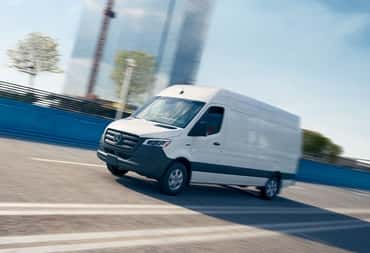 Picking a Sprinter wheelbase isn’t a decision you want to reverse once shelving and racking go in. We work with Alabama businesses every day that need clarity on the Mercedes-Benz Sprinter 144-inch vs. 170-inch vs. 170-inch Extended wheelbase question before they order upfits or sign financing paperwork. The right choice depends less on brand preference and more on how you actually use the van day to day: a contractor running service calls through Mountain Brook has different needs than a business converting a van into a mobile workshop. Cargo volume, payload, and turning radius all factor into your upfit plans, and getting it wrong after the fact means costly retrofitting. If you want to start comparing configurations now, you can browse our new Sprinter inventory while you read through the specs below.
Sprinter 144-Inch Wheelbase: Built for Tight Urban Routes
Cargo Volume and Maneuverability Benefits
The Sprinter 144-inch wheelbase carries an overall length of 234 inches, making it the shortest and most maneuverable van in the lineup. With a Standard Roof, cargo volume comes in at 319.0 cubic feet, expanding to 374 cubic feet in the High Roof variant. The High Roof body offers a standing height of 79 inches, versus 68 inches in the Standard Roof body. Payload on the 2500 Cargo Van reaches 4,211 lbs, with max towing rated at 5,000 lbs. Its roughly 45-foot turning diameter is the tightest in the Sprinter range, and this configuration handles about two standard pallets of cargo.
Ideal Uses: Service Calls, Deliveries, and Tight Job Sites
This is the configuration we recommend most often for service techs, HVAC crews, and delivery operations working in and around Birmingham. The compact footprint makes parallel parking on narrow downtown streets manageable, and it slides into job sites where a longer van simply won’t fit. If your daily route includes multiple stops, tight alleys, or older parking structures, the 144-inch wheelbase keeps you moving without constant three-point turns.
Sprinter 170-Inch Wheelbase: Added Room for Equipment and Inventory
Cargo Volume and Payload Considerations
Step up to the 170-inch wheelbase and you’re looking at an overall length of 274 inches, roughly 40 inches longer than the 144-inch. In the 2500 High Roof Cargo Van with the Diesel SO configuration, cargo volume jumps to 488 cubic feet, enough for about three standard pallets. Payload sits at 3,814 lbs, with max GVWR of 9,050 lbs and a base curb weight of 5,236 lbs. This configuration also offers a 24.5-gallon fuel tank and a max GCWR of 13,930 lbs for anyone pulling a trailer. Turning diameter grows to about 52 feet, so parking requires a bit more planning than with the shorter model.
Ideal Uses: Trades, Mobile Workspaces, and Larger Loads
Electricians and plumbers, along with other equipment-heavy trades, tend to gravitate toward the 170-inch wheelbase because it accommodates permanent shelving without sacrificing all your walking space. It’s also a strong pick for mobile workspaces that need a workbench or tool wall bolted in, since there’s enough length to build out a functional interior and still haul inventory.
Sprinter 170-Inch Extended Wheelbase: Maximum Space for Conversions
Extra Length Benefits for Upfits and Custom Builds
The “Extended” designation refers to added body length, not a longer wheelbase. The 170-inch Extended still rides on the same 170-inch wheelbase and wheel spacing as the standard 170-inch, but it adds 16 inches to the rear overhang, bringing overall length to 290 inches. That extra body length pushes cargo volume to 533 cubic feet, the largest in the lineup, with an interior bed/load length of 189 inches. It’s rated for 3,704 lbs of payload and 79 inches of standing height, and it handles about four standard pallets.
Ideal Uses: Conversions, Large-Scale Mobile Businesses
The 170-inch Extended is the go-to choice for camper conversions, mobile clinics, and other large-format mobile businesses that need every available inch. If you’re planning a build-out with a bathroom or sleeping area, this is the platform that gives upfitters room to work without compromise.
The three configurations stack up side by side like this:
| Spec | 144-inch | 170-inch | 170-inch Extended |
| Overall Length | 234 in | 274 in | 290 in |
| Wheelbase | 144 in | 170 in | 170 in |
| Cargo Volume | 319.0 cu ft (Standard Roof) / 374 cu ft (High Roof) | 488 cu ft | 533 cu ft |
| Payload / GVWR | 4,211 lbs payload / 9,050 lbs GVWR | 3,814 lbs payload / 9,050 lbs GVWR | 3,704 lbs payload / 9,050 lbs GVWR |
| Interior Bed/Load Length | N/A | N/A | 189 in |
| Roof Height Availability | Standard Roof, High Roof | High Roof (Diesel SO) | High Roof (Diesel SO) |
Roof Height and Wheelbase: Finding the Right Combination
Wheelbase length determines how much floor space you get, while roof height determines whether you can stand up inside the van. Standard Roof gives roughly 68 inches of standing height, while High Roof stretches that to up to 79.1 inches, a meaningful difference if your crew is in and out of the cargo area all day. Exterior height runs about 100 inches for Standard Roof and 111 inches for High Roof, depending on drivetrain and trim.
That distinction matters most once you factor in Alabama garages: older garages and carports often cap out around 7 to 8 feet of clearance, and a High Roof build with roof rails, a fan, or solar panels can approach 10 feet. Measure your garage or loading dock before you commit to a High Roof configuration.
How Wheelbase Length Affects Driving, Parking, and Alabama Routes
City Driving in Birmingham, Huntsville, and Mobile
On the highway, the 144-inch and 170-inch models drive nearly identically, so interstate commutes between Huntsville and Mobile won’t feel dramatically different regardless of which you choose. The gap shows up when roads narrow. Birmingham’s historic downtown streets, alleyways, and older parking decks put the 144-inch model’s smaller turning radius to good use, while the 170-inch and 170-inch Extended require wider berth and more forward planning at intersections and tight lots.
Rural Roads, Parking, and Garage Clearance
Rural Alabama routes tend to favor the longer wheelbases, since two-lane county roads and highway stretches don’t punish extra length the way city blocks do. Parking becomes the bigger consideration once you’re back in populated areas, particularly around loading docks or shared lots with limited turning space. If your business splits time between rural service routes and tighter in-town stops, it’s worth test-driving both lengths before deciding.
Matching Wheelbase to Payload and Upfit Plans
Payload capacity isn’t simply a function of wheelbase length. GVWR, roof height, and drivetrain configuration all play into it. Across the full Sprinter lineup, Cargo Van payload ranges between 3,351 lbs and 6,812 lbs depending on setup, and a longer wheelbase, taller roof, or AWD configuration can each pull payload down independently of one another. For context, the 3500XD Cab Chassis on a 144-inch wheelbase carries a payload of 6,433 lbs, max towing of 7,500 lbs, and max GVWR of 11,030 lbs. Wheelbase alone doesn’t dictate what a Sprinter can carry.
Upfit cost also scales with van size. Larger cargo volume generally means a more expensive conversion, since there’s more surface area to outfit with shelving, wiring, and paneling. Fuel economy and resale value are worth weighing too: a longer, heavier van with a taller roof will typically use more fuel and may depreciate differently than a compact 144-inch model. Before finalizing anything, we recommend nailing down wheelbase and roof height first, since retrofitting shelving or a conversion after the fact is far more expensive than planning ahead. If you’re ready to talk through fleet financing or upfit compatibility, our team at Mercedes-Benz of Birmingham Commercial can walk through financing options or connect directly through our contact page.
A short list of questions worth answering before you decide: what’s your typical cargo load on a daily basis, how many parking or loading locations do you regularly use, what’s your garage or carport clearance, are your routes mostly urban or rural, and do you have upfit or conversion plans that need specific interior dimensions. Answering these upfront will save you from a costly reconfiguration down the road.
Explore and Test Drive Sprinter Wheelbase Options at Mercedes-Benz of Birmingham
Mercedes-Benz of Birmingham has been Alabama’s Mercedes-Benz leader for over 40 years, and our Commercial location in Hoover specializes specifically in Sprinter and eSprinter sales and service, along with parts, mobile service, and financing. Comparing the 144-inch, 170-inch, and 170-inch Extended in person, behind the wheel, gives you a much clearer picture than reading numbers off a spec sheet.
Schedule Your Visit
We’d encourage you to reach out and schedule a test drive so our team can walk you through which wheelbase and roof height combination fits your operation best.
Frequently Asked Questions
How much longer is the 170-inch Sprinter than the 144-inch?
The 170-inch Sprinter measures 274 inches overall, compared to 234 inches for the 144-inch model, a difference of 40 inches in overall length.
What distinguishes the 170-inch Extended from the standard 170-inch model?
Both share the same 170-inch wheelbase and wheel spacing. The Extended variant adds 16 inches to the rear body, bringing overall length to 290 inches and cargo volume to 533 cubic feet, compared to 274 inches and 488 cubic feet on the standard 170-inch.
Which wheelbase is best for Alabama’s narrow streets and job sites?
The 144-inch wheelbase is generally the better fit for narrow downtown streets and tight job sites, thanks to its roughly 45-foot turning diameter versus 52 feet for the 170-inch models.
Does a longer wheelbase reduce payload capacity?
Not exactly. Payload is determined by GVWR, roof height, and drivetrain, not wheelbase length alone. That said, longer wheelbase, higher roof, or AWD configurations each independently reduce available payload, which is why the 144-inch model’s 4,211 lbs payload is higher than the 170-inch Extended’s 3,704 lbs.
Which Sprinter length works best for van conversions?
The 170-inch Extended is typically the top choice for conversions, offering 533 cubic feet of cargo volume and a 189-inch interior bed/load length, the most space available for custom builds in the Sprinter lineup.
Photo Courtesy of Mercedes-Benz