
2026 Mercedes-Benz S-Class vs 2026 BMW 7 Series
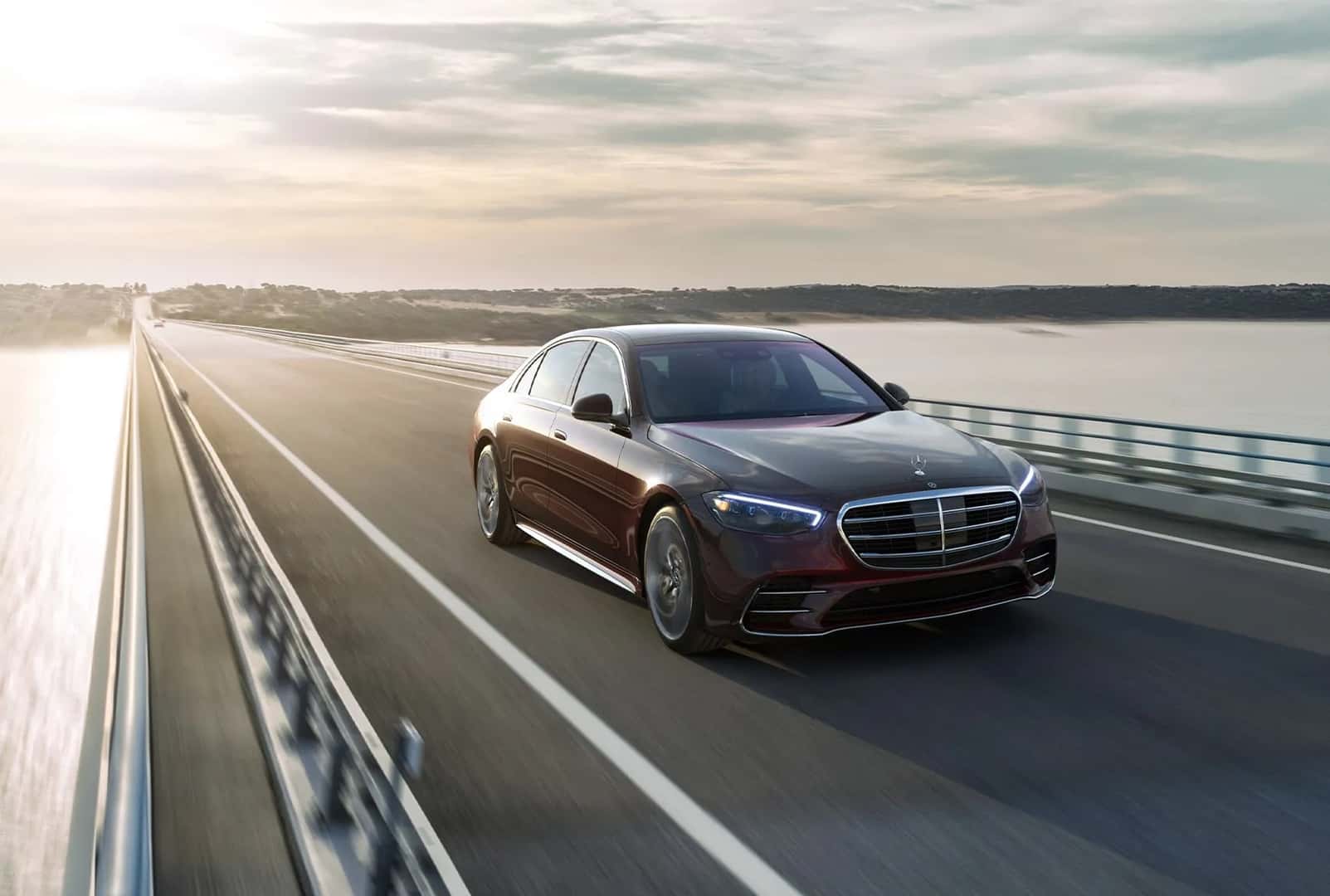
- The 2026 Mercedes-Benz S-Class emphasizes long-distance comfort, quiet refinement, and rear-seat luxury.
- The 2026 BMW 7 Series makes a strong case for buyers who want a more driver-focused flagship sedan.
- Birmingham shoppers can compare S-Class models, financing options, and test-drive availability through Mercedes-Benz of Birmingham.
Few automotive debates carry more weight than the one between the Mercedes-Benz S-Class and the BMW 7 Series. Both sedans sit at the very top of the luxury segment, and both attract buyers who flat-out refuse to compromise. Yet despite sharing a price bracket and a target audience, these two flagships represent fundamentally different answers to the same question: what should the world’s finest sedan actually feel like?
If you’re weighing the 2026 Mercedes-Benz S-Class vs 2026 BMW 7 Series, the distinction runs deeper than spec sheets. It’s about philosophy, presence, and the kind of driving life you want. We invite you to explore our current S-Class lineup and see how the 2026 model stacks up against the competition.
2026 S-Class vs. 7 Series: Two Visions of the Ultimate Luxury Sedan
The S-Class vs BMW 7 Series rivalry has defined the luxury sedan segment for decades, and the 2026 model year sharpens that contrast even further. Mercedes-Benz continues to position the S-Class as the benchmark of seamless elegance, where technology serves comfort rather than competing with it. BMW pushes the 7 Series toward a more driver-focused identity, pulling in buyers who want their flagship sedan to feel as dynamic as it looks.
Neither approach is wrong. Knowing where each car excels is what leads you to the right call. The comparison table below captures the core specs at a glance.
|
2026 Mercedes-Benz S-Class (S 500) |
2026 BMW 7 Series (740i) |
|
|---|---|---|
|
Engine/Powertrain |
3.0L turbocharged inline-6 |
3.0L turbocharged inline-6 |
|
Horsepower/Torque |
442 hp / 413 lb-ft |
375 hp / 383 lb-ft |
|
Drivetrain |
4MATIC® AWD |
RWD (xDrive AWD available) |
|
Key PHEV Option |
S 580e — 503 hp combined, ~47 miles EPA electric range |
750e xDrive — 483 hp combined, 35 miles EPA all-electric range |
|
Fuel Economy (base) |
20 city / 29 hwy MPG |
25 city / 31 hwy MPG |
|
Warranty |
4-year/50,000-mile |
4-year/50,000-mile |
Ride Quality and Long-Distance Refinement
The most meaningful difference between the BMW 7 Series and the S-Class reveals itself not on a test track but on a long stretch of interstate.
Suspension and Road Isolation
The S-Class rides on air suspension that reads road-surface data and adjusts damping before the wheel even contacts the bump. The result is a floating quality that feels almost surreal on rough pavement. Acoustic glass, active noise cancellation, and extensive sound-deadening work together to create a near-silent cabin. Standard rear-axle steering turns up to 4.5 degrees, with an optional upgrade to 10 degrees that genuinely improves both low-speed maneuverability and high-speed stability.
The 7 Series takes a sportier approach to ride quality. Its suspension is tuned for sharper body control, which benefits cornering precision but brings slightly more road feel into the cabin. For buyers who enjoy a connected driving experience, that’s a feature rather than a flaw. For those who primarily want their sedan to feel like a moving sanctuary, the S-Class holds the clear edge.
Highway Cruising
Long highway journeys are where the gap becomes most apparent. The S-Class pairs its air suspension with refined powertrain options and a full driver assistance suite that genuinely reduces fatigue over long miles. Lane centering, adaptive cruise control, and active steering assistance work together with minimal driver input required. The 7 Series handles the highway with full capability, but its sportier calibration keeps the driver more engaged throughout. That engagement is central to BMW’s appeal, and plenty of owners will prefer it. For executive travel or simply logging serious miles in comfort, the S-Class consistently earns its reputation.
Interior Quality, Craftsmanship, and the Rear-Seat Experience
Step inside either sedan and the materials immediately communicate that you’re somewhere exceptional. The character of each interior, though, reflects its brand’s priorities in unmistakable ways.
Cabin Materials and Fit
The S-Class interior is a study in cohesion. Premium leather, genuine wood veneers, polished metal accents, and ambient lighting create a space that feels opulent without feeling excessive. DIGITAL LIGHT headlamps use next-generation micro-LED technology to deliver a larger high-resolution field of illumination, projecting precise road markings and warnings ahead of the car. The design language connects to Mercedes-Benz heritage while remaining thoroughly contemporary.
The 7 Series takes a more forward-leaning aesthetic. Its cabin leans into modern design with bolder lines and a stronger emphasis on technology as a visual element. Materials are genuinely luxurious and build quality is excellent throughout, but the overall feel is crisper and more architectural compared to the S-Class’s warmer, more enveloping ambiance.
Rear Passenger Comfort and Executive Amenities
This is where the comparison gets particularly decisive for buyers who spend real time in the back seat. The S-Class treats rear passengers as the primary audience. Legroom is generous, seating positions are deeply adjustable, and available rear amenities include massage functions, individual climate controls, and heated seatbelts that reach 44°C. These features make it the natural choice for executive transportation and chauffeured use.
The 7 Series rear seat is comfortable and well-appointed, no question. BMW’s optional Theater Screen measures 31.3 inches and stands out as a genuine feature for rear passengers who want an immersive entertainment experience. The overall experience, though, prioritizes the driver in a way that slightly deprioritizes rear-seat luxury compared to the S-Class’s all-encompassing approach to passenger comfort.
Technology, Infotainment, and Driver Assistance
Both flagships come loaded with technology that integrates deeply into the driving experience. The difference lies in how that technology is organized and how it feels to live with.
Cockpit Design and Display Architecture
The S-Class cockpit is built around the MBUX Superscreen: a 12.8-inch central display flanked by dual 12.3-inch screens spanning the full width of the dashboard. The system responds to touch, voice, and gesture inputs, and it learns driver preferences over time to reduce cognitive load while in motion. The impression is of technology working quietly in the background rather than demanding your attention.
BMW Operating System 8.5 pairs a 14.9-inch central display with a 12.3-inch digital gauge cluster in a curved configuration that makes a bold visual statement. The interface is responsive and genuinely modern, appealing to tech-oriented buyers who want their interior to feel as advanced as possible. After extended use, the S-Class approach tends to feel more organic and less demanding. The 7 Series cockpit, though, has a distinct futuristic identity that many buyers will find compelling.
Safety Technology
The S-Class has led in advanced driver assistance systems for years, and the 2026 model continues that tradition. Its safety technologies operate as a unified system: active distance assist, lane keeping, emergency braking, and semi-autonomous driving capabilities are all calibrated to work together without calling attention to themselves. The 7 Series also offers a comprehensive driver assistance suite with excellent real-world implementation. Worth noting: 2026 NHTSA and IIHS ratings are pending for both models at the time of publication. Check the relevant agency websites for current data as it becomes available.
Performance, Powertrain Options, and Driving Character
Both flagships deliver strong, confident power. The S-Class inline-six and V8 options prioritize smooth, effortless delivery above all else. The S 580e PHEV combines a turbocharged engine with an electric motor for 503 hp combined output and roughly 47 miles of EPA-rated electric range, making it the most efficient path to S-Class performance without overpromising real-world electric-only usability on longer trips.
The 740i’s 375 hp inline-six returns 25 city / 31 hwy MPG, a meaningful efficiency advantage over the S 500’s 20 city / 29 hwy MPG for buyers who track fuel costs closely. The 7 Series also offers the 750e xDrive PHEV, combining the turbocharged inline-six with an electric motor for 483 hp combined output and an EPA-rated 35 miles of all-electric range. Performance-oriented configurations make the 7 Series feel more like a sports sedan when driven with real intent. For the buyer who occasionally wants their flagship to feel like a performance car, BMW makes a compelling case.
Pricing, Value, and Long-Term Ownership Considerations
Both sedans sit at the very top of the luxury market, and their pricing reflects that. The S-Class typically carries a slight premium reflecting brand heritage, depth of standard features, and available customization. Its strong resale reputation also contributes meaningfully to total cost of ownership over time.
The 7 Series offers some flexibility in entry pricing, particularly through hybrid variants, and the fuel efficiency advantage of the 740i adds up over high-mileage ownership. Both vehicles carry a 4-year/50,000-mile warranty and benefit from access to manufacturer-trained technicians.
Ready to compare these two flagships in person? View available S-Class models and see what’s currently in stock at Mercedes-Benz of Birmingham.
Which 2026 Flagship Sedan Is the Right Choice for Birmingham Buyers?
The answer depends entirely on what you want your luxury sedan to prioritize. Want a car that wraps you and your passengers in effortless comfort, insulates you completely from the outside world, and handles every detail of the journey with quiet confidence? The 2026 S-Class is the clear choice. Its reputation as the benchmark luxury sedan is earned, not inherited, and the 2026 model reinforces that position at every level.
If you want a flagship that keeps you more engaged behind the wheel, communicates a more contemporary aesthetic, offers an outstanding rear Theater Screen option, and delivers better fuel economy at the base trim, the 7 Series makes a genuinely strong argument.
For Birmingham buyers whose priorities align with executive comfort, long-distance refinement, and rear-seat excellence, the S-Class remains the standard.
Schedule a 2026 S-Class Test Drive at Mercedes-Benz of Birmingham
Reading about these two flagships covers the facts, but experiencing the S-Class firsthand tells you everything the specs cannot. We operate two full-service campuses in Irondale and Hoover, giving buyers across the Birmingham area convenient access to the full 2026 S-Class lineup.
Whether you’re deciding between the BMW 7 Series and the S-Class, exploring financing and leasing options, or ready to get behind the wheel, our team is here to help. Contact us today to schedule your 2026 S-Class test drive.
Frequently Asked Questions
Is the 2026 Mercedes-Benz S-Class more comfortable than the 2026 BMW 7 Series?
The 2026 Mercedes-Benz S-Class places a stronger emphasis on serene ride quality, cabin quietness, and rear-seat comfort, while the 2026 BMW 7 Series leans more toward a driver-focused luxury experience.
What is the main difference between the 2026 S 500 and the 2026 BMW 740i?
The 2026 S 500 prioritizes smooth power delivery, 4MATIC® all-wheel drive, and flagship comfort, while the 2026 BMW 740i offers a sportier feel and stronger base fuel economy.
Can I schedule a 2026 S-Class test drive at Mercedes-Benz of Birmingham?
Yes. Mercedes-Benz of Birmingham serves shoppers through its Irondale and Hoover campuses, and buyers can contact the team or schedule a test drive online.