
Mercedes-Benz Sprinter Gross Vehicle Weight Rating Explained for Business Owners
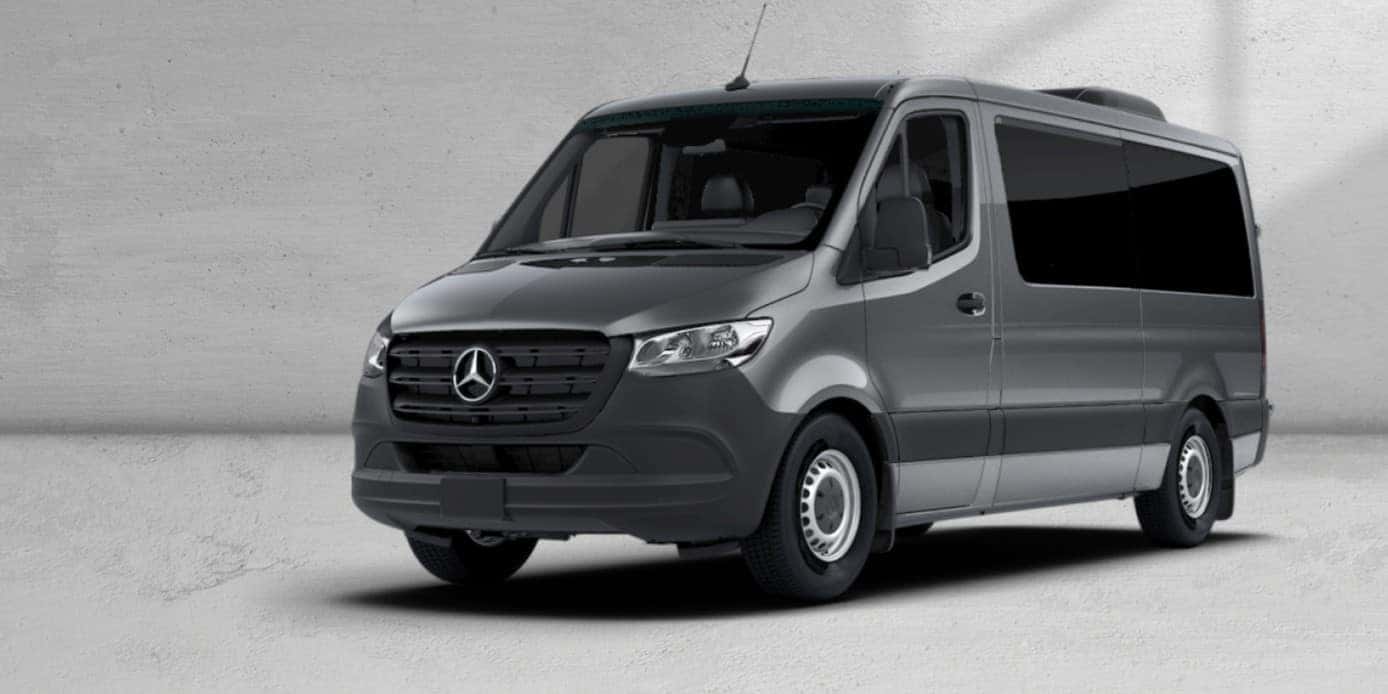 Mercedes-Benz Sprinter GVWR, or gross vehicle weight rating, is the maximum loaded weight the manufacturer specifies for a single van. It covers the van, its occupants, and the cargo they carry. If you run a fleet or a trade business, this number sets the limits of what your van can safely do each day.
We put this guide together for Alabama business owners who want to size a van correctly and avoid overloading. If you’d rather talk through your own load, contact us and our Sprinter team will help.
What Mercedes-Benz Sprinter GVWR Means for Your Business
Treat GVWR as a firm planning limit. A van has to carry the crew, tools, and supplies for a normal workday and still stay inside its rating.
GVWR Defined: The Maximum Loaded Weight Your Van Is Rated For
GVWR is the manufacturer-specified loaded weight of a single vehicle. It tells owners how heavily the van may be safely loaded, and manufacturers permanently apply a label stating it.
Manufacturers assign the rating based on how braking and load-bearing components respond to weight. That includes tires and suspension, plus steering and drivetrain, along with cargo capacity, size, and intended use. The rating comes from Mercedes-Benz. The dealership has no say in it.
What Counts Toward GVWR: Passengers, Cargo, Equipment, and Upfits
Every pound goes against the rating. Occupants, tools, installed equipment, hitch-mounted accessories, and trailer tongue weight all use up capacity. Small additions matter when a van works near its limit. Modifications can also affect the stated GVWR and reduce load-carrying capacity. Load information may appear on a label or in the owner’s manual.
Know your label: the certification label on the driver door jamb lists GVWR, GAWR front and rear, and unloaded weight for that specific van. On a 2500, front axle rating runs 4,101 lbs standard or 4,409 with the optional front axle, with 5,359 at the rear. Step to a 3500XD and the rear rating climbs to 7,721, and a 4500 reaches 7,934. Those axle numbers matter because a van can sit under its GVWR and still overload one axle if the weight is stacked at the back. Ratings vary by model year, wheelbase, roof height, powertrain, and options, so always read the label on the van in front of you. Our team can confirm exact figures.
GVWR vs. Payload vs. Towing Capacity
People mix these three terms up constantly, and they answer different questions, so it helps to keep them apart.
How Curb Weight, Payload, and GVWR Fit Together
Curb weight, also called unloaded vehicle weight, is the van with maximum operating fluids but without cargo, occupants, or accessories ordinarily removed when not in use. Payload is the weight the van can add beyond that unloaded weight.
GVWR is the ceiling. Without other load-carrying information, capacity before modification is GVWR minus unloaded vehicle weight. Rated cargo load is generally GVWR minus unloaded vehicle weight and 150 lbs times the designated seating capacity. Anything you install after delivery uses part of that capacity, and what remains is what you can actually carry.
Towing Capacity and GCWR: How Trailers Affect Your Limits
GCWR, or gross combination weight rating, is the manufacturer-specified loaded weight of the van and its trailer together. Mercedes-Benz publishes it alongside towing capacity: 13,930 lbs on the 2500 and on the 3500XD AWD, and 15,250 lbs on the 3500, 3500XD RWD, and 4500.
That figure constrains you independently of the towing number. A 3500 rated to tow 7,500 lbs still can’t exceed 15,250 combined, so a heavily loaded van reduces what you can legally pull behind it.
Tongue weight is the other limit people miss. A trailer’s total weight isn’t the same as the downward force on the hitch, and that force counts against the van’s payload even though the trailer’s own axles carry most of it. Mercedes-Benz caps tongue weight at 500 lbs on the 2500 and 750 lbs on the 3500, 3500XD, and 4500. On a 5,000-lb trailer loaded to a typical 10 to 15 percent tongue weight, you’re using 500 to 750 lbs of payload before a single tool goes in the van.
How to Calculate Real Payload and Avoid Overloading
Published payload is not space reserved for merchandise or materials. Real payload is what remains after you subtract everything else the van carries on a normal day.
Step-by-Step Payload Calculation With a Worked Example
Start with the ratings on the individual van, then subtract everything it carries on a normal day. Here’s how that runs for a plumbing van on a 144-inch 3500:
-
- GVWR from the door-jamb label: 9,990 lbs
- Base curb weight: 5,291 lbs
- Driver and one helper: 380 lbs
- Steel shelving and bulkhead: 420 lbs
- Ladder rack and two ladders: 160 lbs
- Tools, fittings, and pipe stock: 1,100 lbs
- Remaining margin: 2,639 lbs
That margin is what’s left for the day’s materials. A water heater and a few hundred feet of copper take a real bite out of it. Run the same arithmetic with your own figures. If the last line goes negative, the van is overloaded. Lighter equipment preserves payload but never raises the rating. And verify a fully loaded van on a scale rather than trusting the arithmetic, because estimates run light.
Want a second set of eyes on your numbers? Tell us about your load and we’ll walk through it with you. You can also browse new vehicles to see what’s available.
Risks of Exceeding GVWR: Safety, Wear, Warranty, and Insurance
Overloading degrades handling and extends braking distance, and it accelerates wear on tires, brakes, and suspension. Those aren’t hypothetical consequences. They’re the reason the rating exists and the reason it’s set where it is.
Overloading can also complicate warranty and insurance claims. Compliance is another concern. If you already own a Sprinter and worry about added equipment, our service center can help.
Sprinter GVWR Across Configurations
Body style and model designation can change the weight ratings and usable payload, and so can installed equipment. A model name alone doesn’t tell you what a particular van can carry.
Two Diesels, and Why the Class Decides Which You Get
Two diesels are offered. The standard output makes 170 hp and 295 lb-ft; the high output makes 211 hp and 332 lb-ft. Both run through the 9G-TRONIC nine-speed automatic. The 3500, 3500XD, and 4500 require the high-output engine, which is part of why payload steps up across those classes.
Cargo Van, Crew Van, Cab Chassis, and Cutaway Differences
A Cargo Van is a finished van built mainly for hauling. Crew Vans add seating, which means occupant weight takes a bigger bite out of capacity. A Cab Chassis and a Cutaway are built to receive a body or upfit from another source, so the completed body counts against working capacity.
Mercedes-Benz’s Cab Chassis page features an “Upfit Your Sprinter with Mercedes-Benz ExpertSOLUTIONS” section. It’s a good starting point if you plan a custom body.
How 2500, 3500, 3500XD, and 4500 Models Compare
Mercedes-Benz offers the Sprinter Cargo Van in 2500, 3500, 3500XD, and 4500 configurations. Here’s how the classes compare at their strongest build:
| Configuration | GVWR | Max payload, Cargo Van | Max towing | Above 10,001 lb threshold? |
| 2500 | Up to 9,050 lbs | 4,211 lbs RWD, 3,858 AWD | 5,000 lbs | No |
| 3500 | Up to 9,990 lbs | 4,699 lbs RWD | 7,500 lbs | No |
| 3500XD | Up to 11,030 lbs | 5,739 lbs RWD, 5,441 AWD | 7,500 lbs | Yes |
| 4500 | Up to 12,125 lbs | 6,812 lbs RWD | 7,500 lbs | Yes |
That last column is the one to look at first if compliance matters to your operation. Crew Vans run lower on payload than Cargo Vans in the same class, since seating and occupants take their share, and Cab Chassis figures run higher because the body hasn’t been built yet. Every number above is a ceiling for the strongest configuration in its class. Wheelbase, roof height, AWD, and options all pull it down, and the certification label on the specific van is what governs.
One trim worth knowing about: the Cargo Van WORKER starts at $48,990 against $50,830 for the standard 2500, with the same 4,211-lb payload and the same standard-output diesel. If you’re upfitting the van anyway and don’t need the equipment the 2500 adds, it’s the cheaper way into the same chassis.
What a High Roof and a Longer Wheelbase Cost You
Body choices cost payload, and the spread is larger than most buyers assume. Take the 2500 with the standard-output diesel:
- 144-inch wheelbase, standard roof: 4,211 lbs
- 144-inch wheelbase, high roof: 4,134 lbs
- 170-inch wheelbase, high roof: 3,814 lbs
- 170-inch extended, high roof: 3,704 lbs
That’s 507 lbs of payload traded away for cargo volume and standing room, on the same model with the same engine. All-wheel drive costs another 353 lbs on the 2500 and 298 on the 3500XD.
None of that argues against a high roof or AWD. It argues for deciding in what order: if payload is your binding constraint, pick the class first and the body second. If standing height is what makes the work possible, pick the body first and step up a class to buy the payload back.
GVWR for Alabama Contractors, Delivery Fleets, and Mobile Service Businesses
Tie GVWR to your daily routine: crews and their tools, delivery loads that change by the hour, and service vans carrying permanent equipment. Plan around your heaviest realistic workday. An empty van tells you little.
Contractors and Trades: Tools, Materials, and Shelving Weight
Picture an electrician in Hoover with a two-person crew, shelving, and wire spools. The shelving and crew use payload before a single box of materials goes in. Count storage systems and mounted equipment first, then decide how much material you can haul.
Delivery and Mobile Service: Cargo Loads and Upfit Planning
A last-mile driver running Birmingham and Irondale routes has loads that change through the day. The heaviest stop of the morning matters most. A mobile service van carries fixed equipment all day, so that weight comes off payload permanently.
Before you order, run through this upfit checklist and add each item to your payload math:
- Shelving. Aluminum runs a fraction of what steel does across a full van, and on a build near the limit that difference decides what else fits
- Ladder racks. The rack itself plus the ladders, and the weight sits high, which affects handling as well as payload
- Bulkheads. Fixed weight behind the driver that never comes out
- Refrigeration. The unit, the added insulation, and the power source it runs on
- Generators. Including a full fuel tank, which people forget to count
- Tool storage. Weigh it loaded, not empty
- Liftgates and ramps. Often the single heaviest upfit item, and worth pricing into payload before ordering
Choosing the Right Sprinter GVWR and Configuration
Start with the intended load, the number of occupants, and any planned trailer, then factor in body style. Then compare configurations by the capacity left after essential upfits are installed.
Compliance Basics: The 10,001-lb Threshold and What It Can Mean for Your Fleet
This is general information, not legal advice. Confirm your obligations with FMCSA or a qualified fleet compliance advisor.
FMCSA’s commercial motor vehicle definition for interstate commerce starts at a GVWR of 10,001 lbs. Look at where Mercedes-Benz set the ratings: the 2500 at 9,050 and the 3500 at 9,990. That eleven-pound margin on the 3500 isn’t a coincidence, and it means you can buy the heavier chassis and stay under the line. The 3500XD at 11,030 and the 4500 at 12,125 sit above it.
One rule catches people out. An interstate truck-and-trailer combination counts when the two GVWRs together exceed 10,001 lbs, even when each is under it alone. A 3500 with a modest equipment trailer clears that easily.
Plan for Upfits and Future Growth Before You Order
Equipment added later can reduce usable capacity even if your cargo stays the same. If you expect a heavier storage system, a new accessory, or a trailer, build that in now. Our specialized van upfit support can help you plan, and financing is available when you’re ready.
Talk to the Mercedes-Benz of Birmingham Sprinter Team
Most people arrive knowing they want a Sprinter and not much else. That’s fine, but the conversation goes faster if you come with your actual load: how many people ride in it, what tools live in it permanently, what you haul on your heaviest day, and whether a trailer is in the picture.
Give us that and we’ll work backward to the configuration that fits, rather than selling you a class and hoping the math works out. Sometimes that means a 3500 instead of the 2500 you were expecting. Sometimes it means a standard roof, because the payload matters more than standing height. Either way you’ll know before you order instead of after your upfitter is finished.
We’re at two campuses with factory-trained technicians serving Birmingham, Hoover, and Irondale. Call Hoover at 205-403-5179 or Irondale at 205-848-7000, or contact us online and tell us what the van has to carry.